
Buying guide · Updated October 2026
Best Fermentation Temperature Control for Homebrewers (2026)
The cheapest upgrade for better beer: pick the right controller, heater and chiller setup.
Homebrew Rigs is reader-supported: we may earn a commission when you buy through links on this page, at no extra cost to you. Retailers never pay for rankings. See our Affiliate Disclosure.
Slug: /best-fermentation-temperature-control/
Alternate slug / redirect: /fermentation-temperature-control/ (the checklist PDF links here — set a 301 redirect to the main slug in Rank Math)
Meta title: Best Fermentation Temperature Control for Homebrew (2026)
Meta description: Inkbird + chest freezer, glycol chillers, heat wraps, and jacketed fermenters compared. Why temperature control improves your beer more than a new brew system.
Prices checked: October 2026. Prices change often; check the retailer link for today’s price.
Here’s the uncomfortable truth for gear lovers: if your beer has off-flavors, a new brew system probably won’t fix it. Fermentation temperature control will.
Yeast produce heat as they work — an actively fermenting carboy can run several degrees above room temperature. Too warm and ale yeast throw fusel alcohols (hot, solventy) and excess fruity esters; swing back and forth and yeast can stall early, leaving diacetyl (buttery) or a too-sweet finish. Holding the beer at a steady, chosen temperature is one of the biggest quality jumps a homebrewer can make — and the most common starting setup costs less than $350.
This guide compares the options from cheapest to most advanced, using complete price.
Quick Picks
- Best overall: Inkbird dual-stage controller + used chest freezer or fridge — controls heating and cooling, fits one or two fermenters, ~$50 controller + $0–$300 freezer. → Inkbird on Amazon
- Best budget (heating only): Fermwrap heat wrap + Inkbird — for cool basements where you only need to add heat. ~$60–$80 total. → MoreBeer
- Best Wi-Fi / app control: Inkbird Wi-Fi controller (ITC-308 Wi-Fi) or RAPT Temperature Controller — log and change temps from your phone. → Amazon
- Best upgrade for multiple fermenters: Glycol chiller + jacketed or coil-cooled fermenters (Ss Brewtech, Penguin, BrewBuilt-style) — precise, compact, cold crash without a freezer. ~$700–$1,200 chiller, fermenters extra. → Glycol chillers at MoreBeer
- Best “no-freezer” all-in-one: Fermenter with cooling coil + small chiller (e.g., Ss Brewtech FTSs, BrewBuilt CoolStix-style, Kegland FermZilla + glycol) — when you don’t have floor space for a freezer.
Comparison Table
| Option | Heats | Cools | Cold crash | Fermenters | Space | Complete price* | Buy |
|---|---|---|---|---|---|---|---|
| Swamp cooler (tub + water + ice) | No | Some | No | 1 | Small | $15–$30 | Amazon |
| Fermwrap/heat pad + Inkbird | Yes | No | No | 1 | None | $60–$80 | MoreBeer |
| Inkbird + fridge/chest freezer chamber | Yes (with wrap) | Yes | Yes | 1–4 | Large | $100–$400 | Amazon |
| Wi-Fi controller + chamber | Yes | Yes | Yes | 1–4 | Large | $120–$450 | Amazon |
| Glycol chiller + coil/jacketed fermenter | Yes (with heater) | Yes | Yes | 1–4+ | Small per fermenter | $900–$2,500+ | MoreBeer |
*Complete price = everything needed to hold a set temperature for one 5-gallon batch, assuming you already own a fermenter (except glycol, which needs a compatible fermenter).
Why Temperature Control Beats a Brew System Upgrade
Compare what $300 buys you:
- $300 toward a new electric all-in-one improves efficiency, repeatability, and convenience on brew day. It doesn’t change what the yeast does afterward.
- $300 for a used chest freezer + Inkbird + heat wrap keeps ale yeast in their clean range, lets you brew lagers, and lets you cold crash for clearer beer.
If you’re still brewing on a stovetop and fermenting in a closet, buy temperature control first. Then read our all-in-one electric brewing systems comparison.
Typical target ranges (always check your specific yeast strain’s data sheet):
– Clean American ales: ~62–68°F (beer temperature, not room temp)
– English ales: ~64–70°F
– Belgian / saison: often started cooler and allowed to rise; some saison strains run into the 80s
– Lagers: ~48–55°F, often with a diacetyl rest near 65°F
– Kveik: warm, often 80–95°F — heat matters more than cooling
Free: The Complete-Price Brewing Gear Checklist
Before you buy a brewing system, make sure you are not missing the pump, chiller, controller, or electrical upgrade that doubles the real cost. Get our one-page checklist of everything you need to brew your first batch, with no surprises at checkout.
Email addressSend me the checklist
One useful email when guides are updated. No spam. Unsubscribe anytime. (Sign-up form coming soon.)
The Options, Compared
- Inkbird Controller + Chest Freezer or Fridge — Best Overall
Who it’s for: Almost everyone who brews more than a few times a year.
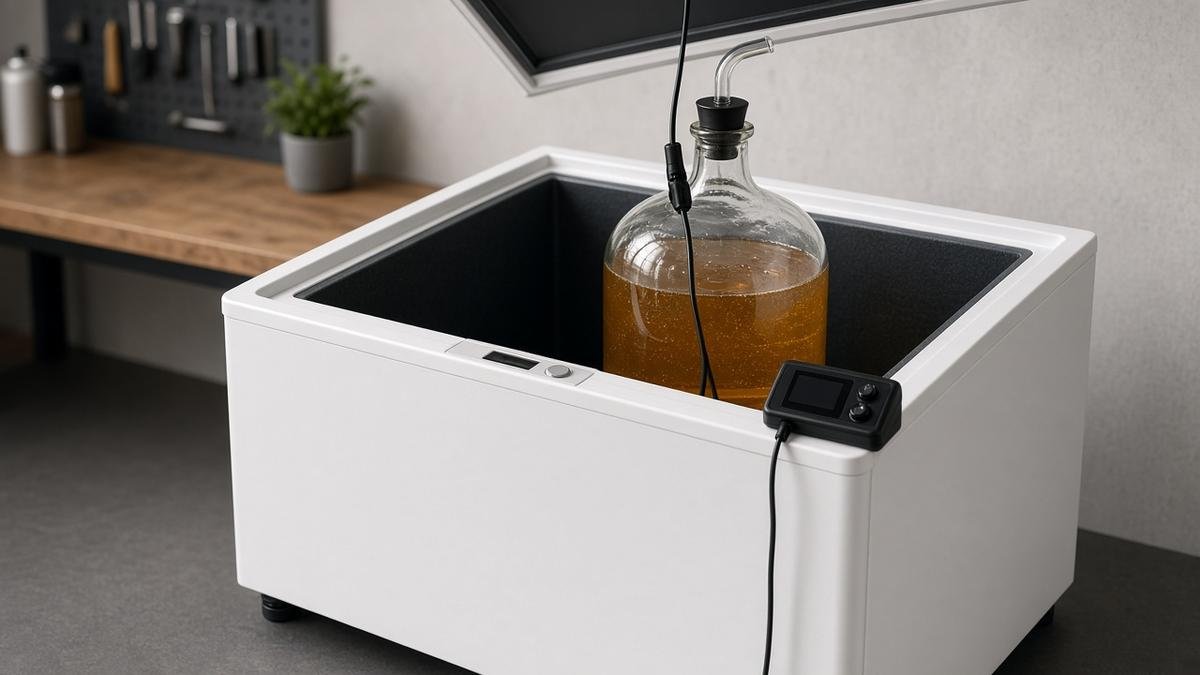
A dual-stage controller like the Inkbird ITC-308 plugs into the wall; you plug a freezer into the “cooling” outlet and a heater into the “heating” outlet. Tape the probe to the side of the fermenter under some insulation (or use a thermowell) so you control beer temperature, not air temperature.
Chamber choices
– Chest freezer (5–7 cu ft): Most efficient; fits 1–2 carboys or buckets. Lifting a full fermenter over the lip is the downside.
– Upright fridge (remove shelves/door shelves): Easier loading; may need the door shelves removed or a door modified.
– Mini-fridge: Usually too small for a 6.5-gallon fermenter. Measure first.
Likes
– Cheap, especially with a used freezer
– Heating and cooling, ales and lagers, cold crash
– Doubles as a keezer later
Dislikes
– Takes floor space
– One temperature per chamber
– Freezer compressors don’t love short cycling — set a compressor delay (the ITC-308 has one)
Complete price: Inkbird ($35–$50) + heat wrap/paint-can heater ($20–$35) + used freezer ($0–$150) or new ($200–$300) ≈ $60–$400.
Inkbird ITC-308 on Amazon · Temp controllers at MoreBeer · Northern Brewer
- Wi-Fi Controllers (Inkbird Wi-Fi, RAPT) — Best App Control
Same idea as above, with logging and remote changes from your phone. The RAPT Temperature Controller pairs with the RAPT Pill hydrometer so gravity and temperature show on one dashboard, and can run fermentation profiles automatically.
Likes: Ramp temperatures for diacetyl rests without being home; alerts if the freezer dies. Dislikes: Costs more; app/cloud dependence.
Pairs well with a digital hydrometer → Tilt vs iSpindel vs RAPT Pill.
Inkbird Wi-Fi on Amazon · RAPT controller at MoreBeer
- Fermwrap / Heat Pads — Best Budget (Heat Only)
If your basement sits at 58°F all winter, you don’t need cooling for ales — you need a gentle, controlled heat source. A Fermwrap or brew belt wraps around the fermenter; plug it into an Inkbird (heating outlet) so it doesn’t overshoot.
Likes: Cheap, tiny. Dislikes: Useless in summer heat; never run without a controller (brew belts can push temps too high).
Fermwrap at MoreBeer · Heat wraps on Amazon
- Swamp Cooler — Cheapest Possible
Put the fermenter in a tub of water with a wet T-shirt and swap frozen water bottles twice a day. It works for knocking a few degrees off and smoothing swings, but it’s manual and imprecise. Good for your first batch; not a long-term plan.
- Glycol Chiller + Jacketed/Coil Fermenters — Best Advanced Setup
A glycol chiller keeps a reservoir of food-grade glycol near freezing and pumps it through a cooling jacket or immersion coil in each fermenter. Each fermenter gets its own controller, so you can run a lager and an IPA at different temperatures side by side.
Options to look at:
– Ss Brewtech Glycol Chiller + Ss Unitank or Chronical with FTSs
– Penguin glycol chillers (sized by fermenter count)
– BrewBuilt IceMaster chillers + BrewBuilt X-series conicals with coils (MoreBeer house brand)
– Kegland Glycol Chiller + FermZilla with a coil (budget route)
Likes: Precise, fast cold crash, small footprint per fermenter, scales to multiple fermenters. Dislikes: Expensive; needs fermenter compatibility; another appliance to maintain.
Complete price: chiller ($700–$1,200) + coil or jacketed fermenter ($150–$900+) ≈ $900–$2,500+.
Glycol chillers at MoreBeer · Ss Brewtech fermenters
- All-in-One Fermenters With Built-in Control
A few fermenters integrate temperature control directly: Ss Brewtech’s FTSs (heat pad + coil + controller), BrewBuilt with CoolStix, and various Kegland/RAPT combos. They’re convenient but usually still need a chiller or ice-water pump for cooling. Read the spec sheet carefully: “temperature control” sometimes means heating only.
Buyer’s Guide
- Do you need heating, cooling, or both? Cold basement → heat only. Warm house/summer → cooling. Lagers or cold crashing → cooling for sure. Most brewers end up needing both.
- Measure beer temperature, not air. Tape the probe to the fermenter wall under insulation, or use a thermowell. Air probes cause overshoot.
- Dual-stage vs single-stage. Single-stage controllers do heating or cooling. Get dual-stage.
- Size the chamber to your fermenters. Measure fermenter height including airlock or blowoff. Conical fermenters often don’t fit chest freezers.
- Plan for cold crashing. Dropping to ~34°F clears beer before kegging. Freezer chambers and glycol do this easily; heat wraps can’t. Watch for suckback through an airlock — use a CO2 balloon or pressure-capable fermenter.
- Pressure fermentation changes the math. Fermenting under some pressure (spunding) can tolerate slightly warmer temperatures with fewer esters, but it’s not a substitute for control.
- Electricity. Chest freezers are efficient; glycol chillers draw more. Neither is huge for hobby use.
Verdict
- If you have the floor space and want the best results per dollar: Inkbird ITC-308 + used chest freezer + heat wrap.
- If you only need heat (cold basement): Fermwrap + Inkbird.
- If you want automation and logging: RAPT or Inkbird Wi-Fi controller, ideally paired with a digital hydrometer.
- If you run multiple fermenters or brew lagers seriously: Glycol chiller + coil/jacketed fermenters.
Start simple. The $60–$400 freezer chamber will improve your beer more than any brew-day upgrade.
Inkbird on Amazon · Shop temperature control at MoreBeer · Northern Brewer
What Else You’ll Need
- Track fermentation remotely → Best Digital Hydrometers: Tilt vs iSpindel vs RAPT Pill
- Serve it cold and carbonated → Best Kegerator & Kegging Setups
- Upgrade brew day later → Best All-in-One Electric Brewing Systems
FAQ
Is fermentation temperature control really necessary?
Not strictly — beer will ferment at room temperature — but it’s the single biggest quality improvement for most homebrewers, especially in warm homes.
What’s the cheapest way to control fermentation temperature?
A swamp cooler (~$20) for cooling or a heat wrap with a controller (~$60–$80) for heating.
Is the Inkbird ITC-308 good for homebrewing?
It’s the most popular budget dual-stage controller among homebrewers: simple, inexpensive, and works with freezers and heaters.
Chest freezer or fridge for a fermentation chamber?
Chest freezers are more efficient and often cheaper used; uprights are easier to load.
Do I need a heater inside a freezer chamber?
In a cold garage or basement, yes — otherwise the beer can drop below range. A small heat wrap or seedling mat on the heat side of the controller works.
Where should the temperature probe go?
Taped to the fermenter wall under insulation, or in a thermowell.
Can I ferment lagers without a freezer or glycol?
Not reliably, except in a consistently cold space. Some “pseudo-lager” ale and kveik strains get close at warmer temps.
Is a glycol chiller worth it for homebrewing?
Only if you run multiple fermenters or conicals that don’t fit a freezer. Otherwise the freezer chamber does the same job for far less.
What temperature should I ferment an IPA?
Most clean American ale yeasts do well around 64–68°F beer temperature; follow your strain’s sheet.
About the author
Written by Mike — 20 years of brewing, from extract syrup and a Cajun cooker to a 10-gallon electric brewery rig. He started Homebrew Rigs to give brewers honest, complete-price gear comparisons with no paid rankings. Pages are updated at least yearly. Read how we research gear on our Methodology page.